
Country Toolkit – Botswana
New acting CEO appointed by Access Bank SA
7th September 2021
Access Bank PLC $500 million Senior Unsecured Eurobond launched
25th October 2021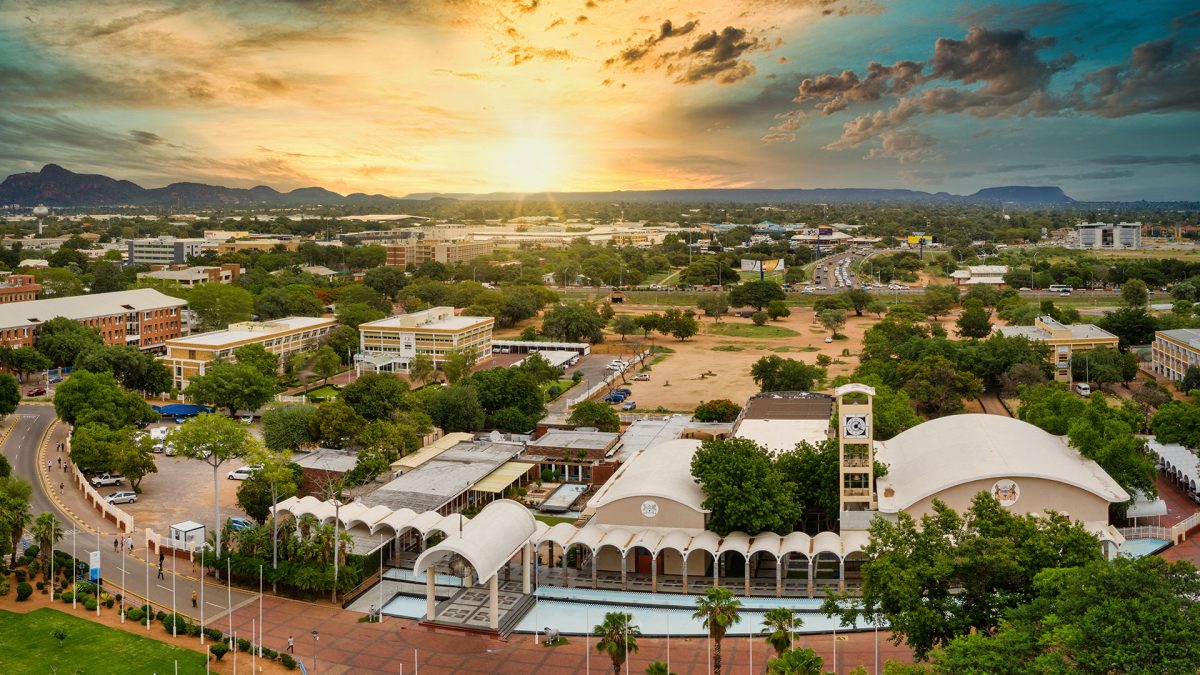
Botswana is a landlocked Southern African country surrounded by Namibia, South Africa, Zimbabwe, and Zambia, and is a member of the Southern African Development Community (SADC). Because most of Botswana is covered by the Kalahari Desert, it is sparsely populated with little agriculture. It protects some of Africa’s largest areas of wilderness, including the Okavango Delta, which is home to one of the world largest endangered species and is listed on the UNESCO world heritage list.
Population
Botswana’s population is currently just over 2.25 million people (2018), with approximately 63% of people living in urban areas at an annual growth rate 3.3%. The percentage of individuals using internet in the country stands at 41.4% with mobile cellular subscriptions per 100 people at 150.
Currency
Botswana Pula (BWP), where 1 BWP = USD0.092.
Currency Volatility
For its currency, Botswana maintains a basket of weights of 45% South African Rand (ZAR) and 55% IMF’s Special Drawing Rights. According to the Bank of Botswana, inflation in Botswana remained steady across 2019 and 2020 at 2.5%, however inflation has increased in 2021 to levels of 8.90% primarily on the back drop of increase in fuel prices and the second round effects of fuel price adjustments. Inflation is heavily affected by fuel prices, which are subsidised by a government fuel tax. Inflation is expected to fall within the Bank of Botswana objective range of 3-6% by second quarter 2022.
Economic Overview
With a conservative fiscal policy and low levels of foreign debt, Botswana offers a relatively stable political, fiscal, and macroeconomic environment. Since its independence in 1966, the country’s economic growth has been strong and stable, thanks to its significant mineral wealth, good governance, prudent economic management and a relatively small population.
The World Bank defines Botswana as upper-middle income, although growth rates have slowed in recent years. The country’s export-driven economy contracted significantly as a result of the coronavirus pandemic, when GDP fell to approximately $15.78 billion in 2020 from $18.36 billion in 2019. However, GDP growth is projected to recover to 7.5% in 2021 and 5.5% in 2022, due to a revival in domestic demand and a rebound in commodity prices.
Key industries
Diamond mining has historically played an important part in Botswana’s economy, and still accounts for a quarter of its GDP and around 85% of export earnings. Tourism is the second biggest foreign exchange earner, and an important source of income. Finance and business service represent around 14.2% of the GDP, and the manufacturing sector around 5.2%. Agriculture accounts for just under 2% of total GDP.
Digital adoption
In 2020, the Botswana government launched “SmartBots”, an initiative to drive economic transformation by taking advantage of the Fourth Industrial Revolution to move the country towards a knowledge-based economy. Projects as part of this initiative include connecting educational and research institutions via a digital network, creating a digital innovation hub, increasing ICT literacy, and establishing a Science and Innovation School of Excellence (SISE) to attract top students across the African continent.
Key socio-economic trends
Despite Botswana being defined as an upper middle-income country, it has high rates of poverty and unemployment, even further exacerbated by the coronavirus pandemic. In 2020, the unemployment rate stood at 24.5%, with youth unemployment at 32.4%.
It’s also a highly unequal country economically speaking, ranking 11th in the world in terms of the most unequal countries in the world. However this gap is slowly closing: between 2009 and 2016, the Gini index fell from 60.5% to 53.3%. A key factor in Botswana’s declining income inequality is regional convergence due to fast growth in rural areas and demographic changes.
Political Context
Considered one of Africa’s most stable countries politically, Botswana is the continent’s longest continuous multi-party democracy. It is relatively free of corruption and has a good human rights record. The ruling Botswana Democratic Party has been in power since 1966, and in April 2018, Mokgweetsi Masisi took over from Ian Khama to become president.
Governance Issues
Although Botswana has a history of being well governed, it has several areas of concern regarding governance of the country. These were recently outlined by various civil society organisations in 2020 and 2021, and include issues such as human rights, food security, separation of powers, education, sustainable development and natural resource management.
Banking landscape
Botswana’s banking industry consists of 10 foreign-owned commercial banks and three statutory banks. Commercial banks hold 91% of total loans and advances, and 93% of total assets. Non-bank finance institutions include micro lenders, pawn shops, and finance and leasing companies. The country has just over 500 ATMs and around 200 branches serving an adult population of about 1.5 million people.
Investment Outlook
Botswana offers several incentives for investors, such as no foreign exchange controls, remittance and full repatriation of profits and dividends, and no restrictions on business ownership.
In April 2021, Moody’s downgraded Botswana’s sovereign credit rating for long-term bonds from ‘A2’ to ‘A3’ due to the coronavirus pandemic, but changed the outlook from negative to stable. The S&P in the September 2021 release, maintained the country’s sovereign credit rating for long and short term foreign and local currency sovereign credit at “BBB+/A-2”. However, S&P revised the economic outlook from negative to stable on account of anticipated rebound in Botswana’s economic growth, partially led by the diamond mining recovery.
Sources:
- https://botswana.un.org/sites/default/files/2021-04/2020%20UN%20BOTSWANA%20ANNUAL%20%20REPORT.pdf
- https://databank.worldbank.org/data/download/poverty/987B9C90-CB9F-4D93-AE8C-750588BF00QA/SM2020/Global_POVEQ_BWA.pdf
- https://www.trade.gov/country-commercial-guides/botswana-market-overview
- https://www.focus-economics.com/countries/botswana
- https://www.worldbank.org/en/country/botswana/overview
- https://www.afdb.org/en/countries/southern-africa/botswana/botswana-economic-outlook
- https://www.economy.com/botswana/indicators
- https://globaledge.msu.edu/countries/botswana/economy
- https://saiia.org.za/research/the-big-governance-issues-in-botswana-a-civil-society-submission-to-the-african-peer-review-mechanism/
- https://smartbots.gov.bw/